Pain-free Overhead Pressing


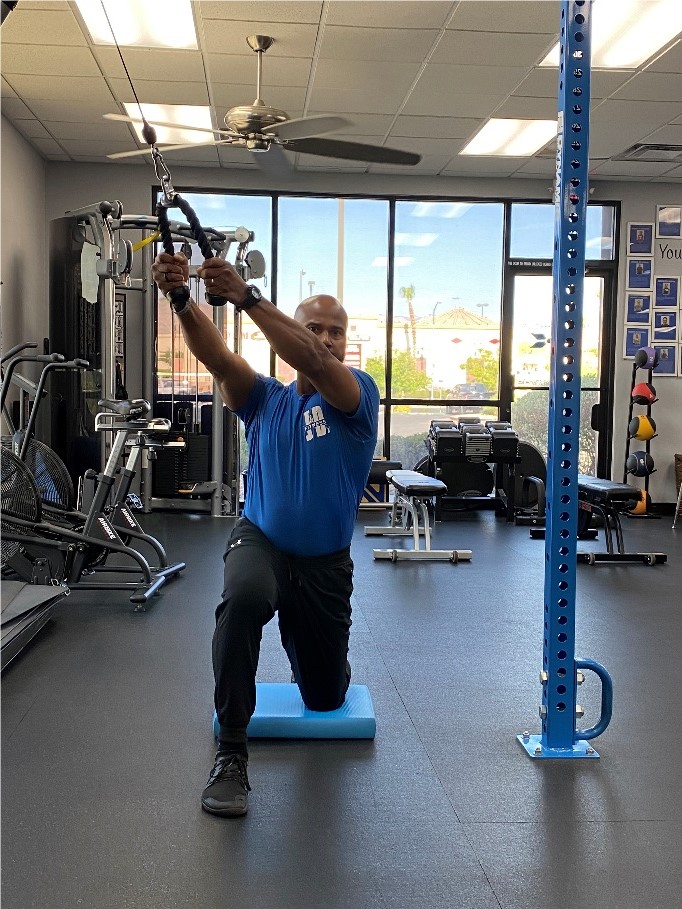
     Using a movement-based approach for a strength training program design, one of the basic tenets is to push or press load. That can include both horizontal and vertical directions. Pressing a load horizontally with success requires that you select the proper load amount. A push-up is a horizontal press, but for either a beginner or a deconditioned person, it may be too high of an entry point. In that situation, we can opt for a TRX chest press, where we can adjust the load by positioning the person appropriately, or a standing press using a resistance band. The band press also has the benefit of increasing load when the person is at their strongest point in the strength curve. Vertical pressing has a few other considerations, other than simply load selection. Tissue quality of the thoracic spine and pectoralis, scapula movement and control, postural issues, and alignment all play a role in determining if a person is a suitable candidate for overhead pressing. Ignoring any or all these elements can set someone up for pain and/or an injury. I like to use the analogy of driving with your emergency brake on. You can get your car to move with the brake on by pressing the gas, but understand that you are prematurely wearing down parts. Pressing a load overhead with poor posture and lack of mobility in the upper back can produce a similar outcome of excessive wear of joints and connective tissue.


ASSESSMENT


     Prior to having someone attempt to press a weight overhead, I first assess if they have the ability to get their arm efficiently overhead without load. This is called shoulder flexion. Load just magnifies the force placed upon the joint, so if there is a compromise of movement without weight, weight will only make matters worse. When putting the shoulder into flexion the humeral head rolls posteriorly and glides inferiorly on the glenoid fossa (shoulder joint) for the first 60° of movement. After this, the humeral head remains stable within the glenoid fossa. As far as joint range of motion, the normal range for shoulder flexion is approximately 0–180°, starting from the arm at your side to fully extended overhead. I am currently using the Functional Movement Screen (FMS) to determine this. There are other assessments available, but I like this option for ease of administration. It requires you to take a measurement. Regardless of which assessment you choose, let’s agree that some type of assessment or screening should be applied. I follow the credo of “If you’re not assessing, you’re guessing.” If they can display adequate movement, then we must exercise good judgement with what load to use. If they don’t, we should investigate why and then use a strategy to improve the disfunction. One example of this, which I frequently see is poor thoracic (upper back) extension or the inability to dissociate thoracic movement from the glenohumeral motion, which creates a restriction of shoulder mobility. This often leads to compensatory movements like excessive spinal arching during overhead activities. We’ve experienced success by having this person initially foam roll their upper back using Grid and Rollga foam rollers and then graduating to trigger point work using hard balls, such as the Acumobility balls.


https://www.instagram.com/p/B1KEj2eHGVY/?utm_source=ig_web_copy_link&igsh=MzRlODBiNWFlZA==


SCAP “J” MOVEMENT


     During healthy shoulder flexion the scapulae glides upward on the ribcage in a “J” shape. Internationally recognized physical therapist and author of Diagnosis and Treatment of Movement Impairment Syndromes, Shirley Sahrmann, states that “scapular disfunction occurs due to dominance or stiffness of downward rotators (e.g., rhomboids, levator scapulae, latissimus dorsi (lats), pectoralis minor/major) and reduced activity of upward rotators like the serratus anterior and trapezius.” To address this, we have used a two-step process of foam rolling the lats and pec minor area partnered with scapulae CARs (controlled articular rotations) or overhead reaches performed using a band or by rolling a foam roller against the wall using the forearms. The end goal of re-establishing good scapulae “glide” can take some time, depending on the amount of time the person has been in this state of impaired movement.


https://youtu.be/AuVabTPn1g8?si=hCNKUp_cUtmiRsB7


https://youtu.be/hwMAea360D4?si=KyE08sOoeMwp7-03


CONTROL


     Sometimes the person will possess the ability to get the arm overhead without proper control. This can lead to winging of the scapulae. As compared to the shoulder blade sitting on the ribcage, it starts to detract, giving the appearance of a wing on their back. After observing this, one of the exercises we like to implement is the TRX “Y” flye. We coach the person to maintain a plank by stacking their body, ribcage over pelvis, as they pull themselves into the “Y” finished position without shrugging in the upper traps.


     There are times when pressing overhead is contra-indicated for someone and should not be in their program. This is when having a coach is helpful and can redirect their focus and energies to other areas to focus on. I don’t believe in categorizing exercises as bad, but rather, exercises some people should not perform.


The Value of a Daily Reset


   As a personal trainer I am frequently confronted with people who wish to make a change. In most scenarios, the change tends to be physical, a desire to change the outward appearance. I’ve also encountered those who wish to make a more cerebral change by embracing a healthier lifestyle. In all situations, I explain that the key is going to be consistency. Committing to an exercise regime (two, three, or four days a week) will make a positive difference and steer you in the right direction, but even the best executed program can sometimes fall a little short. Every day we perform small minor tasks that make our lives easier in one way but come at a cost in another. This may be the amount of time we spend on our phones, which places us in a poor posture (downward head position), or the time spent binge watching a new streaming series, which adds to our sedentary time, or the consumption of overly processed foods, which can lead to excessive calories. Now, I’m not a monk and have participated in each of the prior mentioned scenarios, but as in all course corrections, I believe the first step is acceptance of a problem. So, what’s the fix? How do you undo the evils of modern society? You allocate time every day to reset.


dailyreset


     The immediate response to my suggestion may be, “Add MORE to do in my over-scheduled day? That’s not happening.” The amount of time I’m recommending is ten minutes. You will intentionally spend ten minutes every day making yourself better. Ten minutes to get your mind and body right. A big part of this process is how you mentally approach this task. I’m a firm believer that we make time for what’s important to us. We also tend to shy away from work, remember how the river flows towards the path of least resistance. This is not a workout and is not meant to challenge you. Making a substantial change doesn’t always require you to make a substantial investment in money, time, or in this case, effort. As I mentioned earlier, the key is consistency. The change happens over time from the effects of compounding.


     Consider you’re an accountant and you suffer from tightness in your hips and lower back from sitting at your desk. Ten minutes of mobility work performed every morning right when you wake up will go a long way. If you’re a dentist or mechanic who suffers from neck and back problems, due to standing in a compromised position of a forward head position for extended periods of time, 10 minutes of re-aligning your spine on a foam roller can navigate you out of pain over time. You may need ten minutes of quite meditation to calm your mind and lower the anxiety levels that trigger you to make poor eating choices.  


ds


     Don’t try to fix too much at once. Prioritize and pick one thing you wish to improve. Create the daily habit and then start. Don’t strive for perfection. Accept that there will be missteps along the way, don’t let that deter you. Disregard the “All or nothing mindset” and embrace the process and remember you’re playing the long game. Track and keep a record of everyday you complete the task. That’s how you’ll keep score.


Orthopedic Cost


     George Bernard Shaw stated that “Youth is wasted on the young.” The strength and conditioning industry typically attracts people when they are in their twenties. As with most industries, as you learn strength training principles and protocols, initial reactions and stances on subject matters can be myopic in perspective. In exercise, most coaches and trainers will form their opinion of an exercise based upon how it feels to them. Based upon which direction you take in the fitness industry (youth fitness, athletic training, general population, etc.), your thoughts may change over time. As a trainer who is currently in his mid-fifties and trains people from the general population who range from 50- 70 years of age, I tend to use exercises in my programs that are low impact and joint friendly. Years ago, when CrossFit gyms were all the rage, if you passed by one of those facilities as they were starting a group workout, it was commonplace to observe the members taking a 15-minute run as part of their warm-up. Around the block from my studio is an ice skating


eblast12225


rink and we frequently observe the hockey kids running outside as part of their off-ice conditioning. For most of the people we serve at the studio, running is not a good option. I want to add that we do work with a select population of young athletes returning from injuries and a running protocol is part of their program. To participate in their sport, running is required. This is more directed towards people in the general population training for health and fitness. Out of fairness to any runners who may be reading this, I understand the many health benefits associated with running, but it does come at a cost. This cost has been identified as orthopedic cost.


     Internationally recognized coach, Mike Boyle, defined orthopedic cost as “the stress and strain imposed by an exercise on the non-target tissue.” To use our prior mentioned activity of running, it’s a great activity for building lower body endurance and cardiovascular strength, but the high impact places unwanted stress on knees and the spine. High impact activities can produce three to five times, one’s bodyweight of force on the body, I’ve seen some higher. That means a 175-pound male will experience 525- 875 pounds of force on their ankles, knees and lumbar spine when running. Some may argue that stress is a good thing and it’s this stress that forces the body to adapt by becoming more resilient. I agree with that theory, to a point. I like to use the sandpaper analogy to make a point. Having slightly calloused skin on your hands is a benefit. If not, activities such as holding bars and kettlebell handles during exercise would cause damage and could break skin making them bleed. If you took a piece of sandpaper and scuffed your hands with it for a couple minutes, they would become calloused. That’s a good thing. If you took that same piece of sandpaper and rubbed your skin of your palms for thirty minutes, they would bleed. When I look at an exercise, I consider if that drill will make a person’s body “bleed” over time.


     When I began mapping out the equipment selection for the studio, and the exercises that would be my foundational movements, I gravitated towards drills using the TRX suspension trainer, the Ultimate sandbag, and kettlebells because I could place a positive stress upon my members at a minimal orthopedic cost. Sandbag cleans, suspended push-ups in the TRX, kettlebell goblet squats produce good strength outcomes with minimal stress on shoulders, knees, and lower backs. Here’s an example of a bent over row partnered with an overhead press using a 54lb kettlebell. If I were using a barbell, I would need 135 pounds to get the same training effect.


https://www.instagram.com/janddfitness/reel/CgNOyaBjNr6/


     Another influence is the thirty-four years I’ve spent training people. I’ve had time in the big box gyms and have used some of the more popular exercises you may see. I’ve also seen when people have a bad outcome and complain about back or shoulder pain. I opened this rant today stating Shaw’s quote on how youth is wasted on the young, because many trainers in their twenties will argue that orthopedic cost doesn’t exist. My response to them is to come back to me after twenty years of not only training yourself, but also training over two hundred people.


Goal Setting, the Macro and Micro Steps


     I enjoy goal setting. Many of us do. My favorite part is creating the steps needed to reach my goal. This may be partly due to my obsession at times with details, but nonetheless, for a while I thought everyone enjoyed this step. As many people start the new year with new goals in tow, I thought this would be an appropriate time to share a few steps you should take to help you get to the finish line.


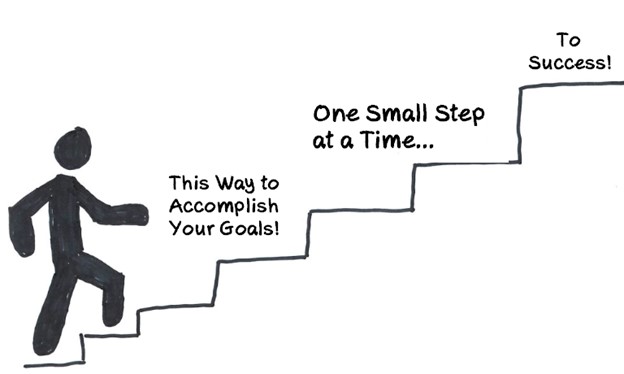
     The first step is to minimize the number of goals to undertake at a time. This list should not resemble the Christmas wish list of an eight-year-old. I want to lose twenty-five pounds, spend more time with my family, go to church more, and start meditating daily. All worthy goals, but a better approach is to concentrate on one at a time. Each goal requires a series of steps, and it’s in mapping out these steps that you’ll achieve success. James Clear, author of Atomic Habits, shares how the first step is creating a simple task towards the goal that you perform daily. He recommends that this task take less than 2 minutes. The objective here is simplicity. What you’re doing is building a habit, and habits change behaviors. I like to call these the micro steps. These smaller steps compound over time, like interest with money, and create the more impressive large, macro changes over time.


1225


   One of the steps I strive to coach members of our studio (janddfitness.com) is the value of a warm-up. Attracting people north of forty years of age, the risk of injury is more apparent. The only way to improve someone’s fitness level is to keep them in the game, working out, not at home nursing an injury. We have a simple warm-up everyone does consisting of soft tissue work using a foam roller followed by a few mobility drills. If someone has a particular ailment, we will add a drill or two to the fold. Effort wise the drills are easy and don’t take more than eight to ten minutes to complete. The value of a warm-up became evident to me from years of training people privately in their homes before opening the studio. It was common for my early morning people suggesting we jump right into the workout bypassing the warm-up, only to sustain a “pulled” back or shoulder. The culprit was always a specific exercise, not that their body wasn’t properly prepared to load the tissue or joint. Like a parent with their kid, picking when to fight their battles, when I became adamant about warming people up, these issues instantly subsided.


   A step I recommend you perform every week, that takes three to five minutes, is to schedule your workouts for the week ahead of time. Don’t leave it for when you have time. Every week you should think about when you plan on exercising for the upcoming week. This is a mind shift that must occur. To make a change, you need concentrated focus, that focus requires making that goal a priority. Disney CEO and Chairman Bob Iger wrote in his personal memoir, Ride of a Lifetime, how he didn’t want to lose time with his kids while taking the reigns of running Disney. He made it a habit to have dinner with his kids on most days of the week. Pulling away from work around 6pm did mean he would have to return to work after dinner on most nights, but he found that hour of time with his kids irreplaceable.


     When creating a goal, sit down and break the goal down into the necessary steps. Dropping twenty pounds requires more than just starting to workout. It means losing three to five pounds a month. That requires an increase in energy expenditure or burned calories. This also includes a deficit in calories, which translates to monitoring how many calories you consume. The last step is enhancing your body’s metabolism which is achieved by increasing lean muscle mass. Take the outcome you desire and break it down into the small micro steps it takes, and that’s how you will make the tremendous change you wish to achieve.


How to Train Your Glutes Effectively


     Training the “glute” muscles for more than aesthetics has grown in popularity outside the ranks of bodybuilders, athletes, and social media influencers of recent. The glutes are essentially the buttocks and include the gluteus maximus, gluteus medius, and gluteus minimus. They are the largest hip extensors in the body. Along with extension of the hip, they affect both mobility and stability of the hip capsule, provide proper tracking of the knee, and aid in reducing stress on both the lower back and hamstrings. Everyone that trains at our studio does some type of glute training.


     Decades ago, renowned physical therapists, Vladimir Janda, noticed certain patterns in patients with back pain. Specifically, he noticed that these patients had signs of inhibited weak glutes. Researcher Dr. Stuart McGill provided data in 2013 that birthed the term glute amnesia, which are inhibited weak glutes. In this study, they monitored glute activation while participants performed glute bridge exercises. They then performed a therapeutic procedure called capsular distension arthrogram which created pain in the hip area. They immediately re-tested and observed diminished glute activity. The common misconception is that the glutes “turn off” when exposed to pain. They never turn off, but rather experience a decrease in neural drive from the brain, a process called arthrogenic neuromuscular inhibition. To maintain a pain-free and healthy lifestyle, everyone should include some form of glute training in their exercise regime.


     Here are a few of my favorite exercises for training the glutes.


     Supine Single Leg Hip Extension- One of the best exercises you can perform is the single leg bridge. Since most people demonstrate asymmetries throughout their body, I recommend that you perform this exercise one leg at a time to maximize glute engagement. Lie on the ground and draw one leg close to your abdominals by holding the knee. If you experience knee discomfort, you can hold behind the knee. The purpose for drawing in and holding the non-bridging leg is to ensure that the hip extends the hip flexors and not the lower back. It’s a common error to lift oneself off the ground by arching the lower back and performing extension of the spine. Start the movement by driving the hips off the ground by pressing the heel into the ground. Because many people tend to be quadricep dominant and have tight and shortened hip flexors, I recommend the emphasis on driving through the heel. Complete eight to ten repetitions on each leg for a total of three sets.


     Loaded Marches- Holding either a dumbbell or kettlebell in front of the chest, perform a standing march in place. Maintain a tall posture and avoid flexing at the hip as you draw a single leg into a flexed knee position. Provide a static pause and hold for one to two seconds before lowering and alternating to the other leg. This exercise trains the mobility of the anterior hip capsule as you draw a leg up, while safely and effectively demanding hip stability from the other leg. Complete eight to ten repetitions for three sets. Challenge the height of the knee as you march and execute a slow and controlled tempo as you march.


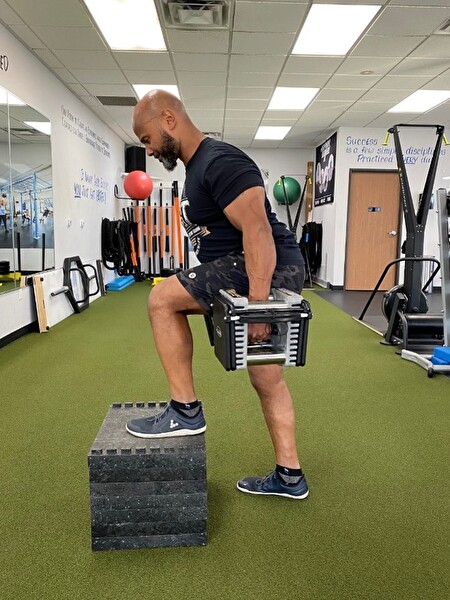
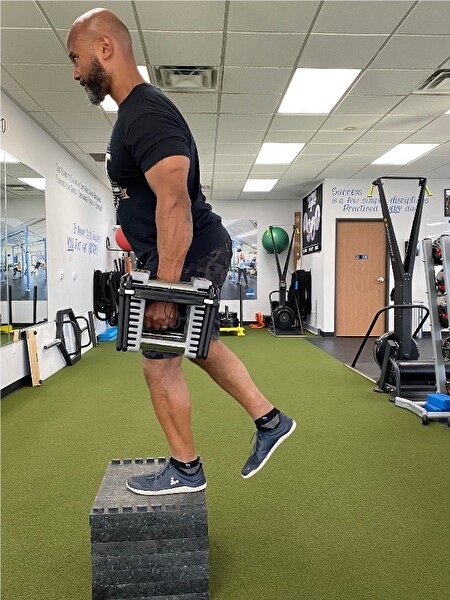
     Step Ups- While holding two dumbbells step up onto a stable platform or box. For safety,


112024pic   112024pic2


perform your initial set of ten repetitions without load. Maintain good posture throughout the movement and keep the whole foot securely on the platform as you step up, making sure to extend the hip at the top of the drill. Avoid using too much load and perform ten to twelve repetitions on each leg for three sets.


     Give these a try and experience the rewards of stronger glutes.


Learn the Rules First


     I was recently thinking about how artificial intelligence, AI, is going to affect the fitness industry. Like other industries, fitness professionals and strength and conditioning coaches are using it, but not well. No one has been able to establish a way that AI will enhance, rather than be a passing novelty. It’s more than asking ChatGPT to “Create me an exercise routine”. That’s too vague. You can narrow down the request based upon outcome goals- fat loss, strength, or mobility, but that’s not personalized for the user. You need to add filters to the process to get anything substantial (i.e., movement limitations, strength levels, skill ability, etc.). For the record, I do think it’s going to be a tool fitness professionals use in their daily lives, just not soon. This thought exercise got me to think about what are some of the filters or rules I use when outlining an exercise routine?


Categorize Exercise by Movement Patterns- Program design has evolved over the last twenty years. It’s filled with principles (example- Specific Adaptation to Imposed Demand SAID), not laws, and principals are theories that everyone agrees are true. In this hierarchy, principals are argued and debated frequently. One of these principles is that muscles do not engage and fire in isolation. Your body can’t utilize your pectoralis without putting stress on the shoulder as either a stabilizer or secondary mover. Muscles work synergistically. Years ago, I was in the camp of categorizing exercises by muscle group. Thirty years ago, when I started personal training, that’s all we knew. Pull-ups are latissimus dorsi (upper back), incline dumbbell presses are pectoralis (chest), lunges are quadriceps, etc. and then strength educators such as Paul Chek, Gary Gray, and Juan Carlos Santana started speaking at conferences about “Functional movement.” These prominent fitness leaders started suggesting that we, and by “we”, I mean strength coaches and fitness professionals such as myself, had it all wrong.


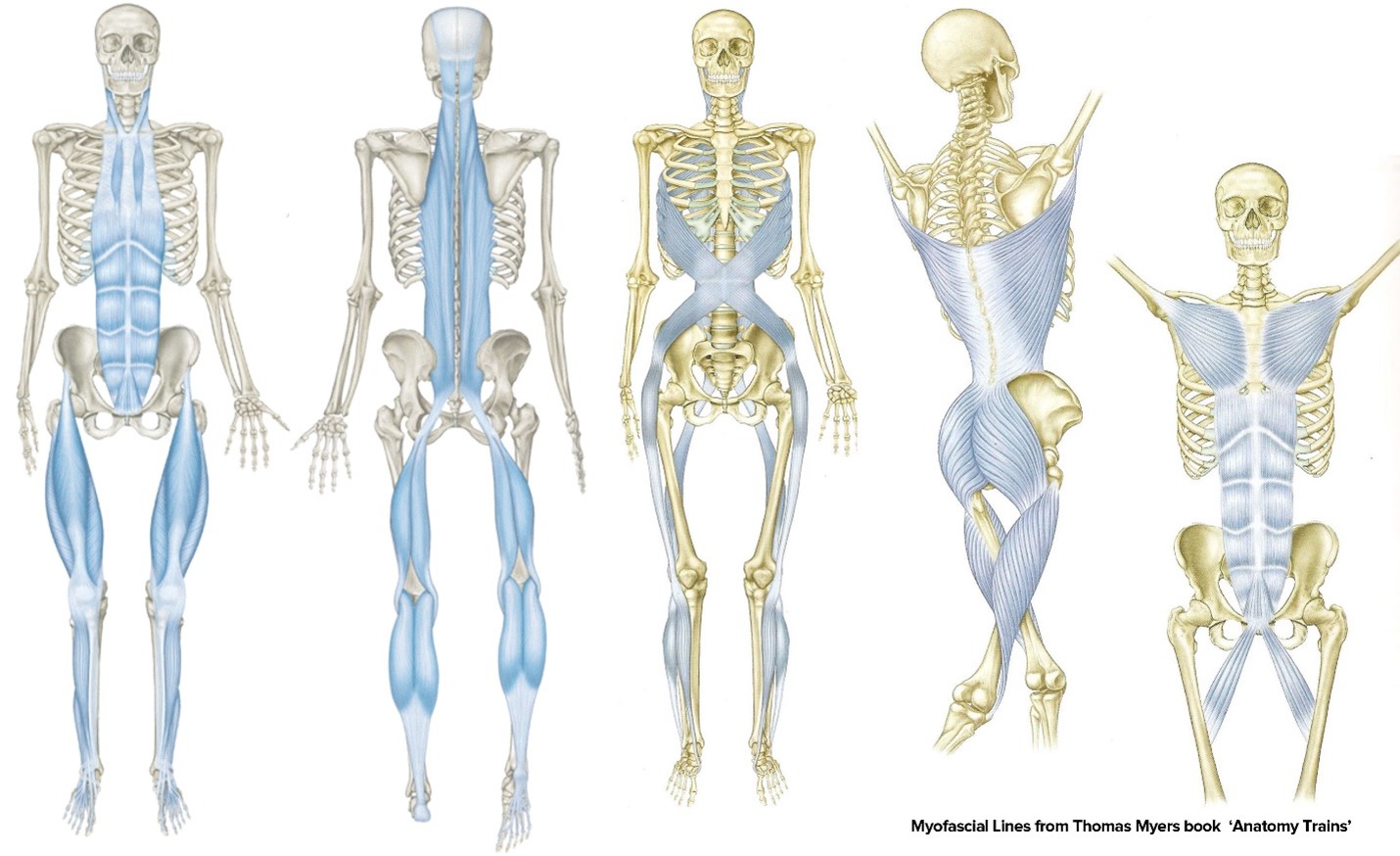
     Muscles in the body play in symphony with one another like the musicians in an orchestra. Sometimes playing louder or softer, but never solo. This concept was built upon when Thomas Meyers authored Anatomy Trains in 2001. This book, using cadaver dissections, shows how the body moves using myofascial meridians. The meridians are developed from birth as we go from lying on our back, to rolling over to our bellies, sitting up, crawling, balancing to stand up, and eventually walking.


skel1


     The agreed upon movement patterns are:

  •   Squat
  •   Lunge
  •   Hip hinge
  •   Push (both vertically and horizontally)
  •   Pull (both vertically and horizontally)
  •   Knee dominant (flex and extend)
  •   Elbow dominant (flex and extend) People will take my “Personal trainer” card away without bicep curls.
  •   Bracing- This is trainer talk for core work.
  •   Rotation
  •   Gait

     When I create a workout, I focus on including most of these movement patterns. Because of fatigue and time restraints for the participant, it’s challenging to cover every pattern in every workout, but your goal should be to address each pattern somewhere in the program whether weekly or monthly.


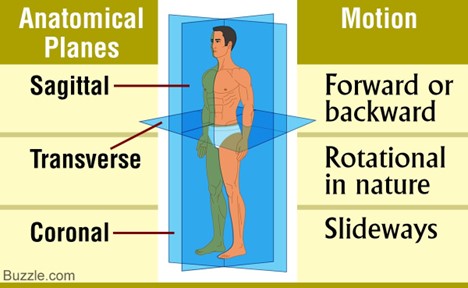
You Move in 3 Planes of Motion- Along with accepting that we move in patterns, we have realized that we move in multiple planes of motion. There are three planes of motion- sagittal (front to back), frontal (side to side), and the transverse (rotational). This is the reason behind the popularity of exercise tools such as medicine balls, kettlebells, and cable pullies which allow more freedom of movement. In the late nineties, the gym industry exploded, and gym size grew. A common observation was that these enormous facilities were filled with machines that worked your body in a sagittal dominant plane of motion. Years ago, the classic lower body workout consisted of leg extensions, barbell squats, angled leg press and lying leg curls. Each of these exercises are in the sagittal. This also explains how someone can have large muscle imbalances.


body


     In 1999, I attended my wife’s family reunion. While at the family affair, I did what you do at reunions, eat, drink, and play softball. To provide context, I had won the Junior National Bodybuilding Championships as a light-heavy weight the year prior. I was heavily muscled and carried a sub 15% bodyfat. You can imagine the laughs when I pulled up with a hamstring strain after I took off to sprint to first base at my first at bat. How could this be? I was strong on the leg press and rear barbell squat at the gym. This recreational activity which required me to quickly change direction and accelerate as fast as I could, causes me to be on the side for the rest of the day with a bag of ice on my leg. I may have been considered “gym strong", but my overall movement competency and functional strength was not great. Bottomline, what you do in your workout should have carry over to improving your efficiency in everyday activities.


You Must Cycle your Exercise Intensity- At the studio, we have three signs that designate the exercise intensity for the week. Once every five weeks, we increase the intensity level and urge our members to push a little harder for the week. This is when personal records are made on either strength, heart rate intensity, or calorie burn. Then once every five weeks we back it down. Exercise improvements are not linear, and sometimes like pruning a tree, you must cut it back to allow for new growth. This also combats the chances of overtraining or exercise burnout, either physical and/or mental. I consider active recovery, training with a lower intensity level, a key for consistent improvements. I don’t make a practice of critiquing other gyms or coaches, but I will question the effectiveness of a program that doesn’t include a system for recovery.


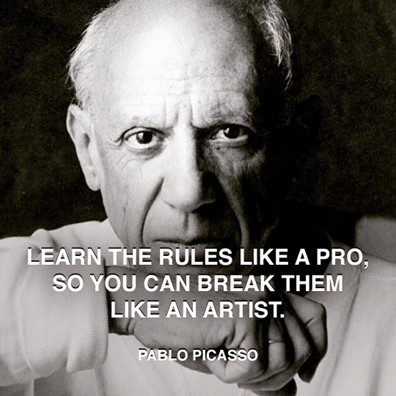
     Following these rules still allows for tons of creativity when selecting exercises. The internet and social media have provided a plethora of exercises to choose from, but you should know the rules of the game before you combine random exercises when constructing a workout. Training shouldn’t be stringent, but rather fluid, and you should be able to color slightly outside the lines. An example is having a workout where you use most of the movement patterns and train in at least two planes of motion. The goal of every workout should not be to break the records of the previous. Rules should be able to be broken. As they say when cooking or creating music, you must “learn the rules first like a pro, before you attempt to break them like an artist.”


pablo


     I’ll see you at the studio.


It Was So Good, I Stopped Doing It


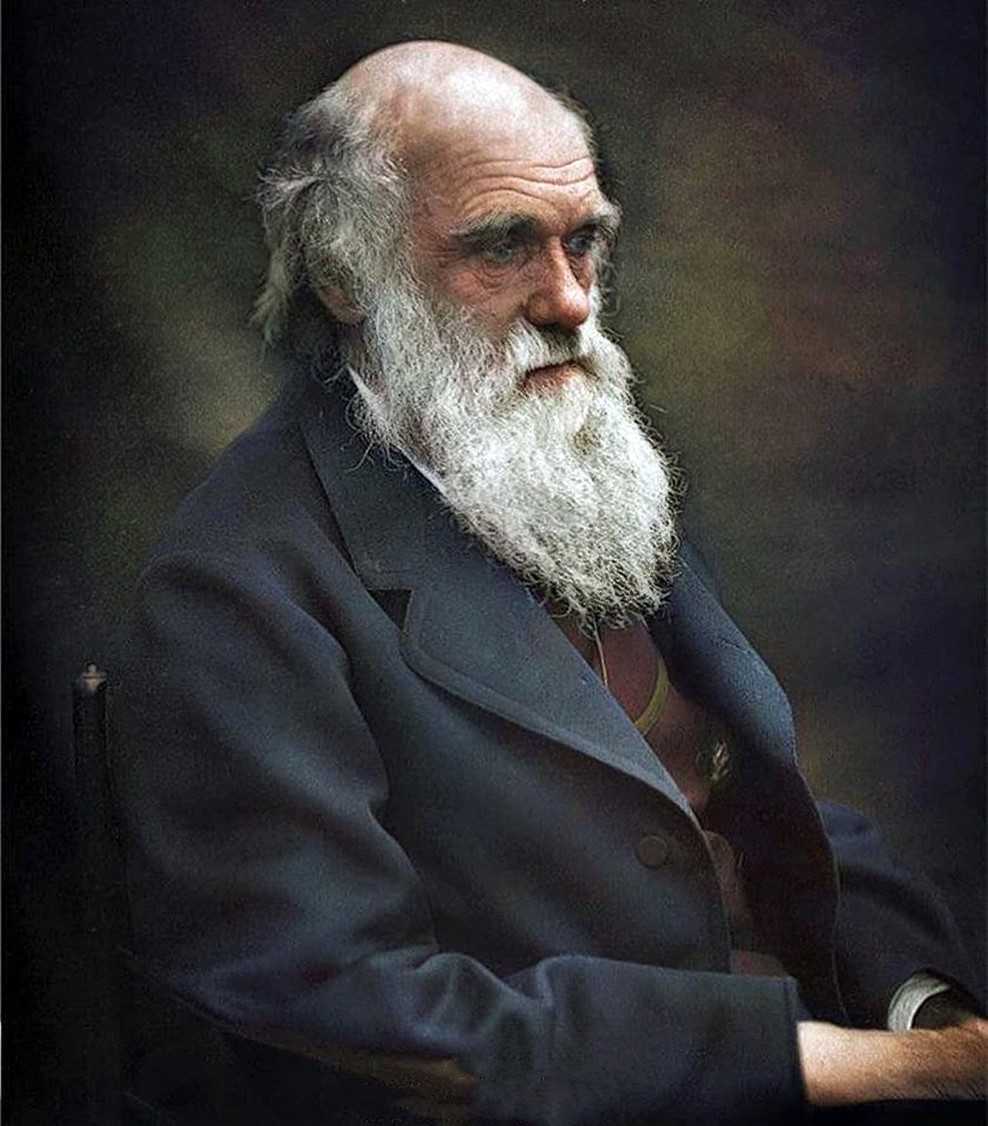
     In 1859 Charles Darwin published his theory of evolution in his book, On the Origins of Species. Darwin, an English biologist and geologist, proposed that all species of life have evolved from a common ancestry is now generally accepted as a fundamental scientific concept. Over the last forty years, in exercise science, we have learned and proven how to get stronger, how to move better, and how to change our body mass composition. These protocols have been scientifically proven to work, and they work so well that we can fall into the trap of stopping them.


charles

(Charles Darwin circa 1874)


     When I was in high school and just starting to get intrigued about getting stronger and building muscle, I was astonished to see the difference in the physique of someone who just got out of jail. Stay with me. I grew up in a middle class town, and in my early years before gyms were on every corner, I lifted weights at a local recreational center. This is the late 1980’s and weightlifting was still considered a cult, purely for bodybuilding. Every once in a while, you would see a new face in the gym, and word would get out that our new “iron head” just came home. These guys were always thickly muscled. I don’t think it was their science based nutritional program. I remember hearing stories of guys living off cereal. Cold plunge baths and sauna were also absent from their daily regimes, so it wasn’t their recovery system.  What I learned is that these guys performed basic exercises (pull-ups, push-ups, lunges, and squats) with basic equipment (bodyweight, dumbbells, barbells) consistently. The understated key word in that statement is consistently. It was commonplace for a guy to lose his privilege to lift weights if he was being disciplined for his actions. Yes, if he got in trouble in jail he couldn’t exercise.


     I recently was reviewing a few ideas and concepts from a textbook I have, Proprioceptive Neuromuscular Facilitation (PNF), by Dorothy Voss, Marjories Ionta, and Beverly Myers. I have the third edition published in 1985, but the original book was published in 1956. The book is a staple in physical therapy schools and it explains how the body works in a symphony of muscles contracting and relaxing in specific sequences. These sequences work in diagonal patterns throughout our bodies. One of the first patterns is developed in babies approximately in their third month, when they learn how to roll over from their back to their stomach. In those first two years of life there are multiple patterns developed, with the finale being your gait, or your ability to walk. I was once told by my friend, Eric Konz, who sells equipment to gyms, that he always starts with treadmills in his proposal. They are the easiest to sell, “everyone knows how to walk”. In an interview recently with Tim Ferriss, the Godmother of physical therapy, Sara Sahrmann, stated “everyone can walk, but many people don’t walk well”. Walking uses a repetitious sequence of limb motions to simultaneously move the body forward while also maintaining stance stability. There’s a dance within your body between your two lower limbs, your trunk, and your arms. Just think about it this way, if you have ever taken a cross-country flight and sat the whole time without getting up for the rest room, think of that initial feeling you have once you stand. Man was not made to sit in a middle seat for six hours without moving.


     I’m a big fan of chops and lifts when I work with someone. If you have ever trained at the studio you are familiar with them. They won’t tone your arms or give you a six pack but they do reset your body, which then allows you to perform those drills that will provide those benefits.


d1d2


     I also know that to build strength, and who doesn’t want to be strong, you need to first move well. Strength is a skill and an adaptation from a muscle being overloaded. The central nervous system responds by working with the muscular system to improve the force in the pattern you overloaded. This process has been proven and is referenced as the Specific Adaptation to Imposed Demand (SAID). Simply put, I squat holding a 16kg kettlebell for 10-12 repetitions. Over time, if I’m consistent (there’s that word again), I will be able to squat using a 20kg kettlebell for repetitions.


     We’ve also learned that if we manipulate the hear rate intensity during exercise, you can increase the caloric burn along with improve one’s body’s ability to metabolize calories. This must be partnered with proper nutrition. Over feeding will lead to an increase in body fat. You can’t consume more calories than you burn daily. Going back to our buddy Darwin, man and woman were not built to have Amazon deliver packages to their door.


     In this ever-changing world we live in, where things change monthly, weekly and sometimes daily, we need to understand that exercise doesn’t have to evolve at the same pace. We’ve learned why things respond the way they do, but we don’t need to always look to change, when there are strategies that have been proven to work if we are consistent. This is when having a coach can help even the most disciplined person from becoming Dug the talking dog from the Pixar-Disney movie, “Up”, Squirrel!!


squirrel_copy


     I’ll see you at the studio.


The Pain You Feel is in Your Head


     There are hundreds of tasks your body repeatedly does that stem from your brain. The brain is the center of your central nervous system and is the control center for movement. It controls the firing, relaxing, and pausing of movement in a specific sequential order. There is a series of things that must happen when you take a step, breath, or blink. Unfortunately, the role of the nervous system as a contributing factor for musculoskeletal pain also exists. This can be the skipping of a step, such as a muscle not firing or the inclusion of an extra step such as an extra muscle adding a step in the process. But how does this happen?


     These issues can be controlled by teaching the person to control subtle movements by conscious effort. Many people believe that since we can do so many things reflexively, we should also have the ability to make corrections reflexively, and that just isn’t so. A study by Hodges and Richardson identifies that the recruitment of the transverse abdominis muscle, one of the deep core muscles located in the abdominals, is delayed in the person who experiences back pain. Another study by Hides has shown that patients with low back pain are experiencing a delayed engagement from the multifidus muscle (another deep core muscle). Both are examples of a motor control problem. It’s not an issue of having strong muscles, but rather teaching the muscle to fire correctly. Drills such as the bird-dog, dead bug, chops, and lifts with all their variations use proprioceptive neuromuscular facilitation (PNF) to teach the body how to stretch, contract, and relax in the correct sequence. If you train at the studio, you are bound to have these exercises in your workout.


     It doesn’t stop with only back pain, as a study from Babyar explains that the source of shoulder pain from some patients is due to excessive shoulder elevation during shoulder flexion to 90 degrees. These people are hyper and overactive in the upper trapezius. These people tend to perform exercises with the appearance that their shoulders are connected to their ears. When coaching people like this I tend to frequently remind them to drop their shoulders. Verbal reminders help them to quickly depress and drop their shoulders. The only problem is that as soon as I walk away to coach someone else, they instantly raise them back up. The good news is that the person can fix the problem, the deeper issue is that they need constant reminding. A frequent comment I get is, “Doug, you need to walk behind me all day and remind me to drop my shoulders.”


     Changes in muscle firing can also happen in gait. Another study, by Mueller and associates, shows that people with diabetes have limited range of dorsiflexion, and decreased power of push-off from the big toe and instead excessively use the hip to swing a leg forward. The hip flexion phase tends to be exaggerated. Drills that address ankle joint mobility will include motor control and can carry over to insuring a person does not overuse their hip flexors.


     When addressing muscular pain, understand that it may not be strength or lack of flexibility. Mobility and strength can solve a lot of ills, but not everything. The problem may be tied to motor control and the organ that lies between your ears.


     I’ll see you at the studio.


Workouts Should Be Fun


   In my book, Boutique Studio Blueprint, I share a personal story about when I was ten years old, and my father asked me “What do you want for your upcoming birthday?” I responded, “A pair of 10-pound dumbbells”. That purchase and gift would launch my trajectory of a lifetime of weight training and exercise. That love of resistance training is still alive and well, forty-four years later. This obviously played an influential role in what I later pursued as an occupation. I know this isn’t normal and I consider myself a bit of an outlier in that regard. I get cranky when I can’t train or have the time. I understand that many of the people I train and coach do not possess the same mindset. Exercise is considered more a task of what they must and need to do, not a passion. Somewhere along my journey I had a realization that, as a coach, if you mix in an element of fun, you can make the workout more palatable for the average user. To take a line from Mary Poppins, “Just a spoonful of sugar helps the medicine go down.”


blog613


     The layout of a strengthening program plays a part in how it’s received. Whether lifting a kettlebell, weight stack of a machine, or bodyweight, it’s all resistance training, and it requires work. One of the reasons people are stagnant in their current program is because they aren’t challenging themselves. They are putting in the time, but to create an environment where the body must respond by making a positive adaptation or change, there has to a be a stimulus. That stimulus doesn’t have to always be more weight. It could be volume or repetitions, the type of load (example: changing from a kettlebell to a resistance band), or the complexity of the exercise. It’s that variety that can add an element of fun. There’s a reason we change the workouts at the studio daily and have a database of over three hundred exercises which I select from. It’s a dance though, because I don’t opt for variety purely to offset boredom of my members. I program the “big lifts” frequently, because to improve at an exercise, you need to get in the reps. I want people to experience that improvement.


     In creating a song, there are multiple parts. The intro, verse, chorus, bridge, solo, interlude, and the outro. A recipe or pattern is used. Workouts are no different. It will vary based upon the goal, but an example for a strengthening and fat-burning workout could be as follows: warm-up, mobility or movement preparation drills, strength, power, and metabolic conditioning. Like a song, you may not like every part, but there’s always that part you like to sing along with. This is when I tell fellow trainers to determine effectiveness, you must consider all components other than does it make them sweaty and tired. This is where the fitness industry dropped the ball years ago, when it was believed every workout had to be a beatdown. “No Pain, No Gain” became an adopted mantra. I’m glad we have evolved from that.


     A significant factor in making a workout fun is the way in that it is delivered. I was recently on an airline flight, when in a calm voice the pilot made an announcement that we were about to experience some turbulence. He had a tone like Barry White. The bumps that soon followed went by quicker. It’s amazing how hearing you have three sets of squats can sound when said with a smile. Mix in a chorus of, “You got this”, and it goes down a lot easier. People are attracted to positive energy and tend to mirror one another with it. There’s no place for a Debbie downer in the gym.


blog6132


     Go lift, lunge, and laugh. Have fun with your workout. If the goal is to make it a habit, and it should be, remember it doesn’t have to be torture. Everything won’t be rainbows and unicorns, but to make it stick you need to have fun along the way.


Don’t Wait Until January to Re-Evaluate


     As we celebrate graduations and the start of summer, our focus can shift from meal prep and tracking our heart rates during workouts, to barbecues and pool time. Summer is seasonal, and the pool is not open all year long, so I agree you should take advantage of these opportunities, but it’s also a good time to re-evaluate those goals we set five months ago.


    ADJUST


 In professional sports, one of the ways coaches are currently scrutinized is how they adjust during the game. They approach the game with a game plan and strategy, but it’s the adjustments during the game and at half-time that can dictate the winner. You should consider taking a similar path. This can mean adjusting the schedule or time required for a task. Maybe back in December you thought 30 minutes of walking every evening before bed was achievable to only realize that 15 minutes is realistic.


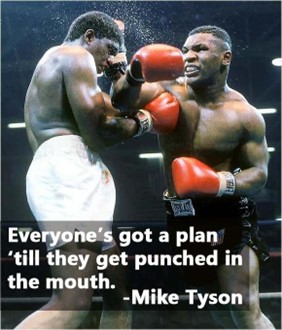
     Another thing to consider is that life happens. Work schedules change and family members get sick. Life is fluid and you must create a plan with some slack in the line. This is a step that I


tyson


struggled with. I tended to create a schedule so tight, that I didn’t allow time for things such as a casual conversation with one of my studio members. When I was forced into these predicaments, I would attempt to complete the task as fast as possible as opposed to embracing the moment of engagement. You can’t plan to be in the moment, you must accept that as a mindset, which brings me to my next point.


ELIMINATE


     Maybe you undertook too much at once. This is one of the biggest mistakes in goal setting. You create a list of five things you want to accomplish. Three goals should be the most. Less is better in this scenario. You must play the long game with goal setting and work towards making things stick for the long term. It’s emotionally a healthier avenue to tackle two to three goals at once, take the six months to a year it may require to in-grain them into your behavior, than to attempt four or five goals simultaneously, eventually quitting on all of them. This takes me to my final point.


     A few months into the year is a good time to re-evaluate and quit. Yes, I said quit a goal that may jeopardize your success in achieving other goals. Again, simplicity is the key in making something stick. As a society, we have become surrounded by antidotes that quitting is always bad. You must finish reading the book, you must eat everything on your plate, or you must finish the race. To provide context on how the strength and conditioning field has taken a full 360 degree turn on this, I’ll share this bit of insight. Ankle mobility has become one of the holy grails of sports. Mobility at the ankle joint can provide more power in jumping and running. What has been determined is that by the age of 15 or so, many athletes have already experienced ankle sprain or strain. In sport, the common mantra when dealing with a rolled or sprained ankle was “to walk it off”. You have traumatized a joint, now let’s continue to use it?   Ignore that there may be long-term consequences that cannot be undone. We’ve learned that when dealing with ankle sprains it’s better to immediately rest the joint and avoid weightbearing, while still maintaining the proper range of motion. This may accelerate the rate of recovery, while minimizing long term negative outcomes. Athletes have always tended to take the short gain while ignoring the long-term effects. Now with the investments in athletes at such astronomical amounts, you have heard things such as “We’re shutting them down”.


    As we cruise towards the mid-way part of the year, my suggestions for examining your new year goals are to adjust and eliminate. Making a change of course and eliminating friction may be exactly what you need to sail your ship successfully to the end of the year.


Next Previous