Years ago, I listened to famed strength coach Mike Boyle state that “Personal Trainers have the hardest jobs in the world.” Boyle is known for working with high level athletes from the NBA, NFL, and MLB. He was the strength and conditioning coach for the Boston Red Sox during their last championship run.
_copy.jpg "Boyleblogpic_(1)_copy")
He was the strength coach for the Team USA Women’s hockey team during the last winter Olympics. He’s a “rock star” in my industry. When he speaks, trainers listen. It sparked my interest when he made that statement. He later went on the explain how he sees most of his athletes 4-5 times a week for 2-3 hours at a clip. Most trainers will see someone twice a week for 45 minutes to an hour. In that time frame, we need to work on fat loss, strength, and mobility (so they can do their exercises). Not to mention, we will work around any injuries they may have. Boyle’s athletes are usually highly motivated people that possess a huge financial upside based upon their performance, where the average trainer has to muster up their best cup of motivation to help people complete exercises they don’t want to do. Mike is right, it is a tough job????
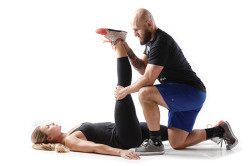
At the studio, I have different workouts available. Each workout is centered around specific outcome goals. We have Torch, our Gold standard HIIT (high intensity interval training) workout emphasizing fat-loss and strength. TRX flow has programming more for mobility and strength, with a heavy emphasis on core. Metabolic Disruption is exactly what the name proclaims; a HIIT workout that focuses on enhancing your body’s ability to burn fat. I’m in the process of releasing a new workout this August called “Mobility Worx”. The goal of this workout is to improve your body’s overall mobility. Before I get into explaining what will be done during this workout I should define mobility. I tend to not use the term flexibility much. Flexibility is defined by the range of motion around a particular joint in the body. Flexibility training is typically static and can be passive. Static means you’re not moving once in the stretch, (think of the classic sit and reach or hurdler stretch for the hamstrings). Passive means someone can assist you into the stretched position. A good example of this is having someone either lay on the ground or a bench and someone else assist them in stretching their hamstring by lifting their leg to the optimal position of 90 degrees.
Mobility is flexibility, the architecture of the joint with motor control. The best example I can provide is a squat. When you perform a body-weight squat your body must contract (shorten) and lengthen multiple muscles at the same time for you to be effective. As you lower your body into the bottom position of the squat, your brain tells your quadriceps to relax as your hamstrings contract to pull you down. That’s motor control. To see an example of mobility watch me perform a 1-minute flow using Mobility Sticks.
Why is mobility more beneficial than flexibility? On multiple occasions I have been able to passively stretch someone’s hamstring where they can get their leg to 80-90 degrees, with assistance. Based upon that, they should be able to squat parallel to the floor, unassisted. I proceed to get them up, ask for them to demonstrate a squat, and they can barely get into position. There can be various reasons for this (past injuries or trauma, dehydrated muscles, weakness, etc.), but lack of motor control is a common culprit.
There’s an old saying in the gym business that:
“You listen to what they want, and then give them what they need”.
I try my best to do both. Rarely do I get someone who lists mobility as their #1 goal. It’s usually “I need to drop 20 pounds around my mid-section and tone-up my arms”. To burn fat, you need to incorporate large muscle, multi-joint type exercises that burn more calories and elevate your heart rate. If you want to get leaner, be prepared for a heavy diet of squats, kettlebell swings and loaded carries if you train at my studio. The problem arises when some people have movement issues and cannot perform those exercises, initially. That’s when we must take a step backwards to mix in some proven mobility drills, so we can take 2 steps forward.
In the last couple of years, one of the more popular topics of discussion in the fitness world has been breathing. We’ve known for years that if you can breathe better and more efficiently, you will get better range of motion. All you need to do is peek into any yoga class and you’ll observe that. The importance has risen in recent years because we’re seeing more people with symptoms of over-training, adrenal fatigue, and auto-immune diseases which have been linked to people living in a constant state of acute stress commonly referred to as “Fight or flight”. This is a response from your sympathetic nervous system when your body feels in danger. The job of the sympathetic system, when in this state is to contract or shorten muscles. It may be more challenging pressing a load overhead or squatting to full range of motion when in this state. Therefore, we’ll be starting every session of Mobility Worx with 2 minutes of breath work to prime your nervous system.
This new workout will include breathing control, muscle and tissue work and mobility drills partnered with muscle activation drills. It may not sound super attractive, but it will incorporate everything someone needs to maximize everything they need to do in other strengthening and fat burning workouts. To repeat the phrase from above, listen to what they want and then give them what they need. If you’re interested in learning more about Mobility Worx or any of the sessions available at the studio, please feel free to reach out to me directly- Doug@janddfitness.com or call the studio (702)892-0400.
See you at the studio.